Teaching Philosophy

 I have been privileged throughout my academic career to be exposed to a variety of teaching environments and pedagogical practices: from a broad background at a liberal arts college, to the focus on experimentation and exploration of art school; various learning modalities such as experiential internships, lecture, seminar, and practice-based work in studios; as well as immersion in both US and UK higher educational methodologies. I have also had to opportunity to turn my professional practice as a print and motion graphic designer towards education through my academic research. 

This diverse experience allows me to analyze how myself, my peers, and students from a variety of backgrounds respond to each learning modality and apply those lessons to my own teaching. My goal is to teach students to effectively communicate, both through their work, and about it—whether that work is art, design, writing or a combination of media languages. 

I strongly believe that one of the keys to this is to recognize that there is no one ‘right’ solution to any problem posed. My students are empowered to bring their own unique insights to the classroom environment, learning as much from each other as they learn from me. I emphasize group critiques where my viewpoint is weighed alongside the views of the student and their peers.

Another key to creating effective communicators is being one myself. I believe that starts with being aware of the assumptions and privileges I bring to my educational encounters and striving to be transparent in my attempts to counteract such biases. There are many different knowledges and ways of understanding and my role is to help students find which work best for them and to encourage those abilities.

My own experience of acculturating from the U.S. liberal arts collegiate environment to the U.K.’s more narrowly focused and independent higher educational system taught me to never make assumptions regarding a student’s or my own understanding of a given cultural environment. It is natural to take for granted the structures inherent in a system we are embedded in, especially when we are not exposed to alternatives. Over the course of my time in Scotland, I have learned that the British university system privileges deep learning over broad exposure to multiple viewpoints we privilege in liberal arts. Experiencing this different pedagogical methodology made me aware of my presumptions. I ensure that students are not only aware of what is being asked for them, but also how their assessment fits into their overarching educational development. I want to make explicit my assumptions and allow students the opportunity to understand the methodology behind student learning objectives.

Assessment is a crucial part of the educational process, and I am aware that students come to higher education with diverse learning styles that do not all benefit equally by any one method of testing. I incorporate a variety of formative as well as summative assessments for students to articulate their mastery of key concepts; students are asked to submit written critical reflection, practical exercises and contribute to class discussions. Any single aspect of these methods may not suit a given student’s learning style, but taken as a whole, the student is able to exhibit their knowledge while developing skills and confidence communicating in each medium. 

Each group of learners is unique, so I make sure to check-in with the class throughout the semester to make sure that the methods I am using resonate with that particular cohort through exercises like stop-start-continue, and project wrappers. Project wrappers and rubrics also allow students to self-reflect on their learning and provide indirect measures to assess how well the program is addressing learning outcomes. I find students engage deeply with practical work where they can ground theory in concrete application, and so I always integrate some form of project-based learning.

I am particularly interested in making sure that lessons from the classroom relate to students’ professional goals and overall learning experience. By surveying students’ goals and competencies at the start of the semester, I can tailor the experience in the classroom to be as productive for the group as possible. I make sure to stress to students that while they are learning technical skills in the classroom, the objective is never to learn a program for the sake of mastering the software. The objective is for them to have another tool with which to achieve their, or their client’s, communication goals. 

It is my role to encourage students’ analytical skills through a guided examination of an archive of canonical work, and their own subsequent application of this critical rubric to their own, and classmates’, projects. Often, it is easier to objectively look at the work of their peers or of past masters than it is to take a step back from the work they are personally invested in. By looking at the work of others with attention to detail, students can turn the same attention to their work and view it with a more critical eye. 

Students must develop confidence not just in the choices made in their work, but in their ability to articulate these choices to a group of peers, in preparation for co-workers and clients. They often find themselves at a loss as to how to communicate their intentions in verbal and written language initially. This is not simply a matter of learning vocabulary, but also of developing the ability to critically engage with communications problems in order to understand underlying structures and analyze the effectiveness of a solution. 

In order to fully understand the structures we use to communicate, students must be exposed to a wide range of artistic voices. In selecting examples, I strive to be inclusive of minority and under-represented viewpoints. Exposing students to a wide range of artistic voices, especially from minority and under-represented backgrounds, my students are challenged to explore ways of seeing that are different from their own. Simultaneously, every student can see themselves contributing to a shared continuum.

I am open to feedback from students and my peers in order to more fully meet the needs of the full cohort of students. For example, I wanted to encourage more students to engage with discussion during a workshop I was giving. I approached a colleague who had many years of teaching experience. She suggested that during the upcoming group critique, I ask the students to place their work on a central table and encourage students to take five minutes before coming together to make one note about each of the other student’s work. That way, students who are anxious when put on the spot have something to help them focus their thoughts and can contribute more. This technique aids students who may not otherwise have the confidence to speak out, without taking anything away from more verbally engaged students. This is something I have integrated into other situations, especially when I have a cohort who is more reticent to communicate during critiques. I have also broken critiques down into small groups so that students who feel anxiety when speaking in a public environment can work on their skills with lower stakes, and build up to full class presentations.

In order to engage students in learning objectives, I deliver classes through multiple delivery channels. While lectures may be an appropriate way to cover key topics, I always include time for discussion to encourage student ownership of the material. There may be a more formal seminar discussion of pre-assigned reading material, or a more conversational discussion of how they can apply these topics beyond the classroom. Workshop or studio-based lessons interspersed throughout the semester can be used to integrate course goals with student’s practical work and open their processes to external stimuli. By utilizing a range of teaching, engagement and assessment tools, I hope to provide a robust learning environment that provides effective access to knowledge for every student.
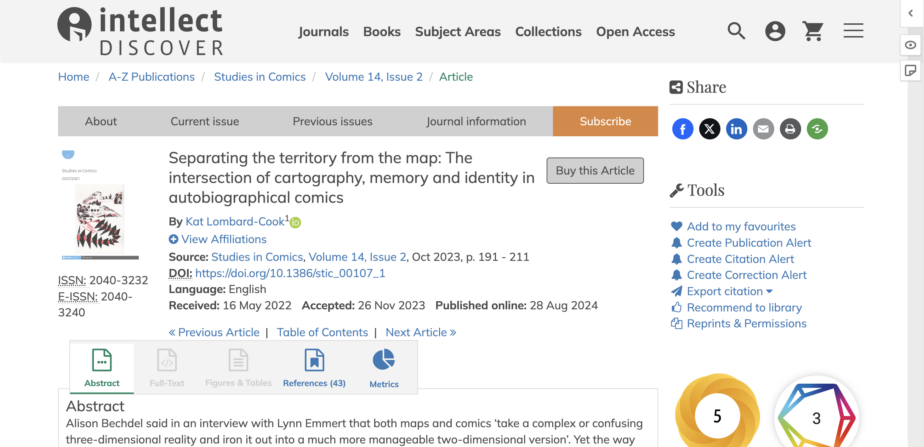
Separating the territory from the map: The intersection of cartography, memory and identity in autobiographical comics—Journal Article

in Studies in Comics, Volume 14, Issue 2, Oct 2023, p. 191 – 211

Abstract

Alison Bechdel said in an interview with Lynn Emmert that both maps and comics ‘take a complex or confusing three-dimensional reality and iron it out into a much more manageable two-dimensional version’. Yet the way maps weave together space, place, history, tradition and personal experience through multiple levels of signification points to anything but transparency of form, especially when deployed within autographics. We often encounter maps in autobiographical comics, where their uses can be as different as the lives they help to illustrate. When the layers of historical, cultural and personal references that intersect on the map plane are embedded in the formalist structures of comics, the levels of signification become multiplied – panel borders and topographical borders intersect, the geography of space merges with the geography of the page, and the subjectivity of the illustrated line overlays the objectivity of cartography. While the semiotic structures of maps and comics are presentationally different, both derive narratorial power from the relationships they make explicit through the marks on the page, and how their boundaries carve up space and time. Mapping traditions may be referenced to signpost authentication strategies within graphic memoirs. The structures of the map may be utilized – or even disrupted – in order to illustrate dynamics that cannot be signified through text or representational mimesis. This article will critically examine mapping modalities used in a variety of autographic narratives, focusing on the link between representation and experience of place for both the author and reader. By analysing what is included and excluded in a map, as well as the relationships the maps create between signifier and signified, we can draw some conclusions about how the mapmaker is positioning themselves within such frameworks as cultural background, socio-economic structures and hierarchies of knowledge.

Full article can be found here: https://intellectdiscover.com/content/journals/10.1386/stic_00107_1

Video and Animation for Multimedia Student Work Examples

Course Description

This project-led elective covers the design, planning and production of video and animation for computer-based interactive multimedia works. It introduces design and communication students to the tools necessary to create videos, motion graphics, animations and user-interfaces for distribution on the web and other digital platforms.

Many of the students in this course are Interactive Multimedia or Graphic Design majors. Any number of them will enter the workforce under the assumption that they can comfortably work and remediate between print, video, web and interactive environments. With this in mind, I have chosen to focus the curriculum on utilizing the specific affordances of video and animation in crafting effective communications.

Assignments offer the students a chance to interrogate how the medium can aid them in reaching their audience and how the same message might be articulated differently in a variety of media channels. Students explore broad storytelling techniques which are especially applicable in animation and motion graphics, but are transferable skills that can inform their communications strategies in other media as well.

By the end of the course, students are expected to have the ability to conceive, research, plan & produce motion graphic projects using the techniques, concepts, and vocabulary of the industry. Focus is placed on the process of concept development, visualization, feedback and revision.

While students must master various features of both Premier and After Effects for this course, I focus on how these tools allow them to reach their communications goals. By grounding the technical details in real-world applications and deliverables that they can see and share, often complex concepts are made more concrete and relatable.

As the students become more adept with the software, the projects build on the processes from prior assignments. Creating a pitch video for a mobile app, for example, will combine the text animation skills with 2D or 3D motion graphics on a technical level, while also considering concepts of user interface design.

Introduction to Electronic Media Student Work Examples

Course Description

This course is required for all Art and Design majors and is the prerequisite for all Graphic Design and Interactive Multimedia major and minor courses. Students are introduced to some of the basic design principles and technical processes used by print and interactive designers, illustrators, and photographers. As such, it is critical to not simply cover software skills, but impart a design thinking mindset.

I received some valuable advice from the chair when approaching this course: students cannot learn all of the tools before yet another “upgrade” becomes available, so the goal should be to understand how the software can aid in solving a communications challenge, rather than mastering a particular technique.

Therefore the focus throughout the course is on solving problems and communicating through design. While each assignment is structured to make students familiar with key software used in design, the goal is not to learn a particular program. Instead, the aim is to understand how the software can aid the student in achieving their vision. It is easy enough to learn a particular skill in a program, but far harder to gain the discernment to know which technique best serves their goals.

Of course, it is still important to introduce students to each of the core design application in the Adobe Creative Suite. Design is both art and craft, equal parts creative vision and application of theory. The assignments balance learning basic principles such as composition, color, typography, and grid based organization with applications for vector and bitmap image editing, page layout and screen based media. Exercises, lectures, and projects focus on understanding the purpose of specific file formats, resolution, color mode selection, and digital image rendering techniques.

Students learn to analyze a brief, and follow the design process of concept development, visualization, feedback and revision. During this course, one of the skills we focus on is the students’ ability to articulate their concepts, defend their design choices, and incorporate outside input. As a graphic designer, or communications professional, students will need to balance their vision with client requirements and recommendations. Learning from the outset how to communicate about design is as valuable a skill as communicating with design.

Interrogating and Analysing Narrative Structure Through Comic Books PhD Submission

How can the structures of graphic narratives help us to interrogate, analyse, and ultimately ground stories of ourselves and our world? Comics open up possibilities for transcending the limits of any single linguistic mode by not relying solely on verbal or visual language.

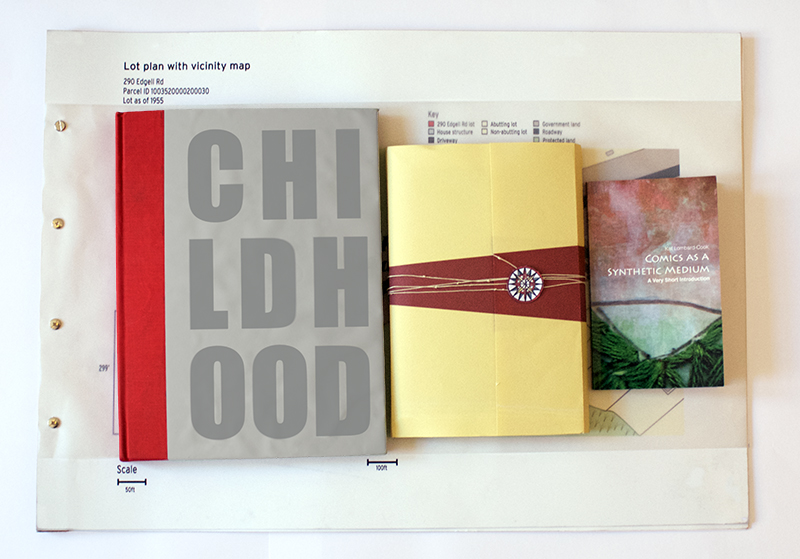
My dissertation consists of four chapters of written research and an exhibition of autobiographical narrative. My practice work challenges the traditional use of comics-specific affordances, such as panel borders, gutter, and use of space as time. Each chapter in the dissertation is its own book-object that enacts the content as well as relates to the larger body of practice work.

Childhood Memoirs—Autobiographical Approaches

Comic creators can utilize the dual linguistic modes of text and image to enunciate what may be unspeakable or incomprehensible, such as moments of trauma. I pay special attention to how subjectivity is presented in graphic memoirs within this context, as the drawn nature of comics allows for shifts in the reliability of the author/narrator that are unique to the medium.

Comics as a Synthetic Medium—A Very Short Introduction

The ‘introductory’ chapter contextualizes my research and comics studies more generally. In comics, text and imagery can actively oppose each other, creating a space where new meaning can be created from this tension. Each panel in a comics page may convey multiple levels of independent meaning, making it unique among narrative media. By examining the semiotic and structural theories presented by Barthes and Derrida, as well as Benjamin, Deleuze, Witgenstein and others, I develop the case for a comics-specific theory of non-binary, non-hierarchical communication.

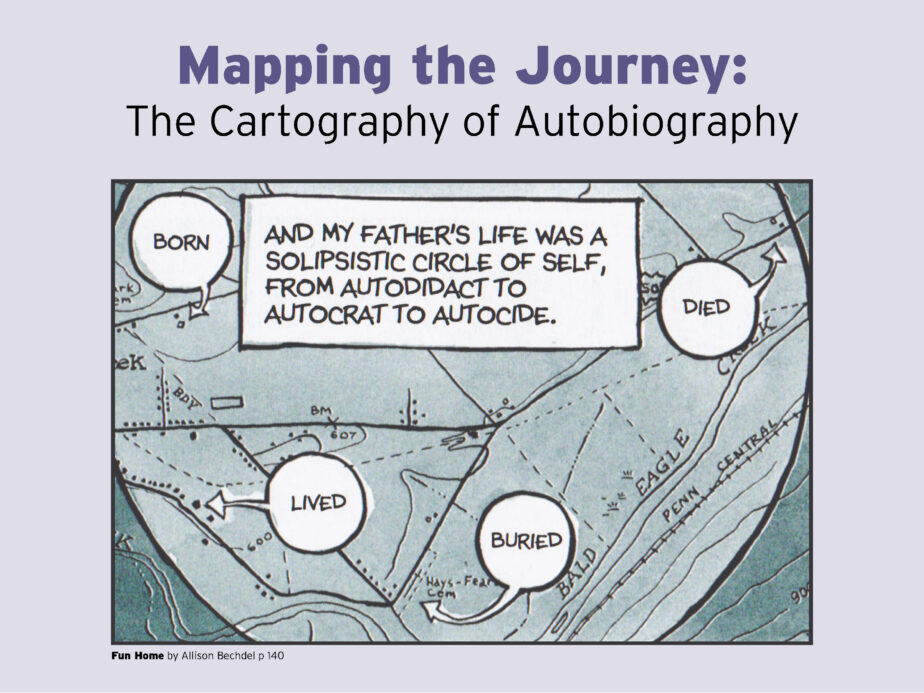
Mapping the Journey—The Cartography of Autobiography

In this chapter, I analyse the supposed objectivity of the map. I also explore how embedding maps within comics impacts reader perception of truth through verifiability.

Media Specificity of Non-traditional Graphic Narratives

The focus of this chapter is on the impact of presenting comics in analog and digital formats. I assert that neither digital nor print is superior to the other, but deliver different experiences to the reader. I articulate the qualities unique to each distribution strategy and theorize ways that creators can take advantage of the media at their disposal.

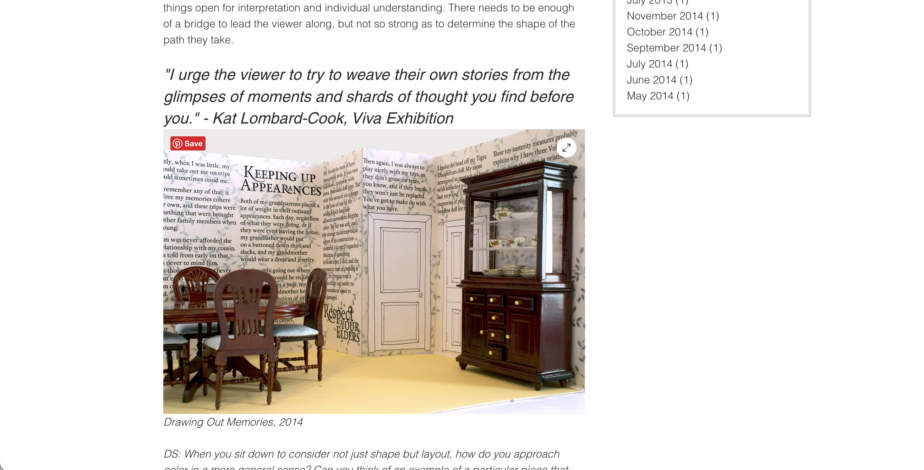
The practical element of my submission takes the form of a collection of objects that utilize a variety of graphic narrative structures outwith traditional comics forms in order to explore facets of my childhood memories. To counteract any attempt to present a wholly unified and reliable narratorial self, I present the same places and memories through various angles and media. I make explicit some of the dissonant ‘truths’ myself and other members of my family were presented with. This is an attempt to consciously confront the fragility of utilizing such collectively constructed memory to construct a stable self-image.

For photo galleries of my viva exhibition and the physical textual submission, see:

PDF full-text of my PhD can be found at: https://era.ed.ac.uk/server/api/core/bitstreams/4243c94a-bb6e-4420-81b7-d11ce2036ac1/content

Jason Shiga’s Meanwhile and digital adaptability of non-traditional narratives in comics—Journal Article

ABSTRACT

The demand for digital comics has increased steadily with the growth of the mobile market. This has led many comic authors to consider the importance of the physicality of their work. While many comics are being digitally converted using existing delivery channels, comics that push the boundaries of narrative find this transition more difficult. Many of the current distribution channels either attempt to emulate books, or guide the reader from panel to panel, but many non-traditional narratives require greater engagement than is allowed for under these models. Jason Shiga’s ‘choose-your-own-adventure’-style comic Meanwhile serves as a valuable example of such a story. Shiga co-developed a stand-alone iPad app for his book, which incorporates the interactive elements of his physical comic. I discuss how the app translated the experience of the book object to the digital realm, and touch on other experimental attempts to engage with readers digitally.

This PDF is an Accepted Manuscript of an article published by Taylor & Francis Group in Journal of Graphic Novels and Comics on 22 Sep 2014, available for citation online: http://www.tandfonline.com/doi/full/10.1080/21504857.2014.943410

Mapping the Journey: The Cartography of Autobiography Conference Talk (Jun 23, 2015)

Conference paper given at the Sixth International Graphic Novel and Comics Conference / Ninth International Bande Dessinée Society Conference, University of London Institute in Paris

Abstract

In everyday life, we use maps to help us interact with terrain both familiar and alien. Yet navigation is merely the most literal utilization of cartography, especially within graphic narratives. In autographics, maps are often incorporated, but their use can be as different as the stories they illustrate. Some, like in Allison Bechdel’s Fun Home, externally verify the objectivity of the memoir by allowing the reader to compare drawn maps to the real location. Others focus on subjective experience of place, and may serve as a mnemonic aid for the author, allowing them to tie their memories to concrete locations. Sometimes familiar referents such as streets and businesses are replaced in order to highlight how the author’s reality differs from the reader’s, such as in Zeina Abirached’s A Game for Swallows, where a map illustrates the route her parents take to her grandparent’s house through the streets of war torn Lebanon, charting objects that can be used for shelter from snipers. This talk will critically examine mapping modalities used by various autobiographical authors, focusing on the link between representation and experience of place for both the author and reader.

Slides

MA in Illustration Students Zine Workshop 2014

In November of 2014, the Edinburgh College of Art was holding an artist book and zine fair called Book Marks @ECA as part of Bookweek Scotland. In conjunction with this event, I was asked to give a workshop over the course of one week to the MA in Illustration students on zines. The outcome of the workshop was to lead to pieces that could be displayed and sold at a table at the Book Marks @ECA event. I started the workshop with a introductory talk, some slides of which I have included below, that discussed the history and cultural contexts zines grew from and explored ways in which illustrators can use this distribution method as a way to experiment with their practice. Knowing there would be a short turnaround time from being assigned the brief to group critique to public presentation, I focused on how the students could use this project as an opportunity to reframe their existing practice and experiment with how the formal presentation and medium affected meaning within their work. After this presentation, I led a group brainstorming session to encourage engagement with the material, and provided my own archive of independent comics and zines for the students to use as references.

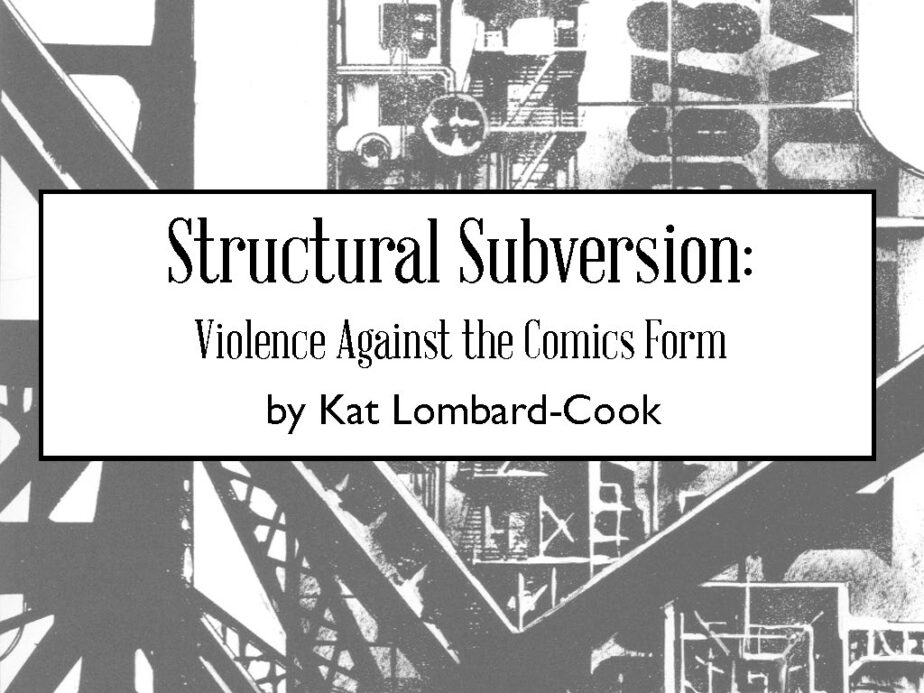
Structural Subversion: Violence Against the Comics Form Conference Paper (Nov 13, 2014)

Conference talk given at Comics Forum 2014, Leeds, UK

Abstract

Power. Control. Dominance. These aspects of violence can be seen throughout the structures that define our world. In his 2008 book Violence, Slavoj Zizek identifies what he calls a ‘triumvirate’ of violence, of which subjective violence is the most apparent form. The sense of urgency and immediacy of subjective violence can be used to distract us from the insidiousness of the two forms of objective violence he defines: the symbolic violence inherent in language, and systemic violence, ‘the often catastrophic consequences of the smooth functioning of our economic and political systems.’ This talk will explore the relationship between these two forms of objective violence and the medium of comics. In this talk I will focus on a specific example, Stray Dogs by Danjiel Zizelj from 2005. Both the form and content of Stray Dogs is permeated with a preoccupation with a violence that cannot be explicitly articulated, which can highlight how the repression of subjective violence can influence our perception of the objective forms of violence. Loosely framed as the memoir of a reporter, Stray Dogs is eight stories that coalesce to project the feeling of a mid-2000s New York shrouded in a miasma of both pollution and the interminable fear of a nation at war with a concept rather than an enemy. The artwork is black and white, but architectural angularity is betrayed by paint sprays that reference graffiti art, a transgression of people against a monolith of civic society. I will use this comic as an example to show the medium’s potential to violate its own tropes in order to engage the reader in discourses of dominance, structure and power.

Slides